PRESS RELEASE » EU Parliament support for low-carbon steel credit
EU Parliament support for low-carbon steel in vehicles will accelerate industrial decarbonisation, industry says
Recent updates
Proposed credit would allow European carmakers to meet 3% of their CO₂ targets through low-carbon steel made in the EU rising to 7.5% from 2035.
Brussels, 21 October 2026 - The European steel industry welcomes a compromise reached in the European Parliament yesterday on CO₂ standards for cars and vans, which includes a dedicated incentive for carmakers to use low-carbon steel Made in the EU.
The compromise agreed by three of the European Parliament’s largest political groups - the European People’s Party, Socialists and Democrats, and Renew - would set an 87.5% CO₂ reduction target for vehicles by 2035, compared with 2021 levels, while allowing qualifying low-carbon steel Made in Europe to contribute up to a further 7.5% towards compliance. The European Steel Association (EUROFER) says the measure would create a much-needed market for low-carbon steel while helping the automotive sector reduce emissions from vehicle production.
Europe’s steel industry is investing heavily in decarbonisation, with more than 60 major low-carbon steel projects already planned or underway across Europe. Together, they could deliver more than 20 million tonnes of additional low-carbon automative steel capacity by 2030 - enough to supply all vehicles registered annually in the EU.
Axel Eggert, Director-General of EUROFER, remarked: “Europe’s steelmakers are investing to produce low-carbon steel but what is the point of transforming our plants if there is no market for the steel they produce? This steel credit can turn demand from European carmakers into investment, production and quality jobs in Europe. Low-carbon steel made in the EU should go into cars made in the EU.”
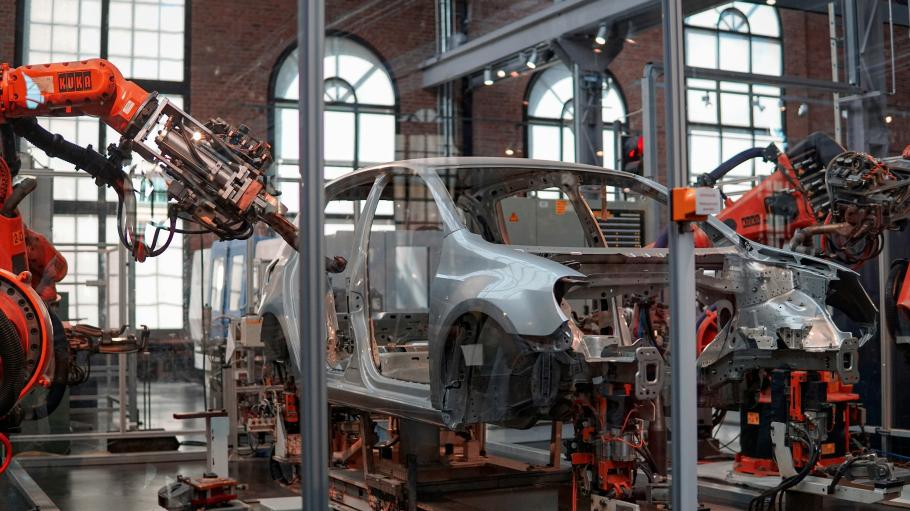
The link with automotive is significant: around 800 kg - 40-50% - of a vehicle is made of steel, while iron and steel account for an estimated 16-27% of vehicle production emissions.
EUROFER stresses that the credit must therefore remain dedicated to low-carbon steel, rather than being broadened to include other low-carbon materials. Separate incentives can support other low-carbon materials without weakening the specific market signal needed to transform steel production.
EUROFER welcomes the inclusion of a ‘Made in the EU’ requirement ensuring that only low-carbon steel melted and poured in the EU qualifies, supporting genuine European steelmaking rather than steel produced elsewhere and only processed in the EU.
With a vote on the proposal foreseen by the European Parliament later this year before negotiations start with the European Commission and Council, EUROFER is calling for the dedicated low-carbon steel credit and a strong Made in EU requirement to be kept in the final agreement.
Contact
David French, Spokesperson and Head of Communications, +32 2 738 79 35, (d.french@eurofer.eu)
About the European Steel Association (EUROFER)
EUROFER AISBL is located in Brussels and was founded in 1976. It represents the entirety of steel production in the European Union. EUROFER members are steel companies and national steel federations throughout the EU. The major steel companies and national steel federation of Turkey, Ukraine and the United Kingdom are associate members.
The European Steel Association is recorded in the EU transparency register: 93038071152-83.
About the European steel industry
The European steel industry is a world leader in innovation and environmental sustainability. It has a turnover of around €215 billion and directly employs around 298,000 highly-skilled people, producing on average 146 million tonnes of steel per year. More than 500 steel production sites across 22 EU Member States provide direct and indirect employment to millions more European citizens. Closely integrated with Europe’s manufacturing and construction industries, steel is the backbone for development, growth and employment in Europe.
Steel is the most versatile industrial material in the world. The thousands of different grades and types of steel developed by the industry make the modern world possible. Steel is 100% recyclable and therefore is a fundamental part of the circular economy. As a basic engineering material, steel is also an essential factor in the development and deployment of innovative, CO2-mitigating technologies, improving resource efficiency and fostering sustainable development in Europe.
As EU steel production rises, helping preserve up to 80,000 jobs, the industry reports €3.4 billion in investment decisions, with a further €2.4 billion expected by year-end.
Brussels, 1 October 2026 - The European Steel Association (EUROFER) has elected Geert Van Poelvoorde, Chairman of the Board of ArcelorMittal Europe Steel, as its new President. Taking office today, Mr Van Poelvoorde said stronger home markets across the steel value chain, secure access to export markets and a strong industrial base will be essential to delivering on the European Union’s ambitions for global competitiveness and strategic autonomy.
Brussels, 1 October 2026 - Europe’s steel market remains under significant pressure, with exports falling sharply, production at historic lows and demand expected to remain almost flat in 2026, according to the European Steel Association’s (EUROFER) latest Economic and Steel Market Outlook 2026-2027. EU steel exports to third countries fell by 20% in the first half of 2026, with declines across all major export destinations covered by the report. At the same time, crude steel production continued to falter, after reaching a historic low of 125.8 million tonnes in 2025, while apparent steel consumption is forecast to grow by just 0.1% in 2026, before increasing by 2.3% in 2027.
The European Steel Association (EUROFER)
172 Avenue de Cortenbergh
1000 Brussels
Belgium
Email: mail@eurofer.eu
Phone: +32 (0) 2 738 79 20