Press releases » IAA: EU must prioritise low-carbon steel ‘Made in Europe’, not foreign imports
Industrial Accelerator Act: EU must prioritise low-carbon steel ‘Made in Europe’, not foreign imports
Downloads and links
Recent updates
Brussels, 6 May 2026 - Europe’s steel industry has warned that the EU’s proposed Industrial Accelerator Act (IAA) risks undermining its industrial and climate ambitions, unless it ensures that demand for low-carbon steel prioritises production within the EU.
The IAA, proposed by the European Commission, aims to accelerate industrial decarbonisation, strengthen value chains and increase manufacturing’s contribution to at least 20% of EU GDP. A key objective is to create lead markets for low-carbon steel in sectors such as automotive, defence and construction.
However, in its current form, the European Steel Association (EUROFER) argues the proposal does not create strong enough demand signals to further increase investments needed for the low-carbon transition of Europe’s steel industry.
Axel Eggert, director general of EUROFER, remarked, ‘If Europe wants to decarbonise its steel industry, it must create demand for low-carbon steel made in Europe. Otherwise, the EU risks funding foreign production while weakening investment, jobs and industrial capacity at home.”
A central concern is the lack of robust and consistent ‘Union origin’ rules. Under the current proposal, products labelled as “Made in EU” could include steel produced outside the EU and only processed within Europe. As more than 75% of EU steel imports come from free trade agreement partners, products from nearly 80 countries could qualify for EU support schemes despite not being subject to comparable carbon costs leaving the European steel industry at a distinct disadvantage.
EUROFER is therefore calling for a single, clear definition of Union origin, based on steel that is melted and poured in the EU, to ensure that public procurement and support schemes genuinely prioritise European production.
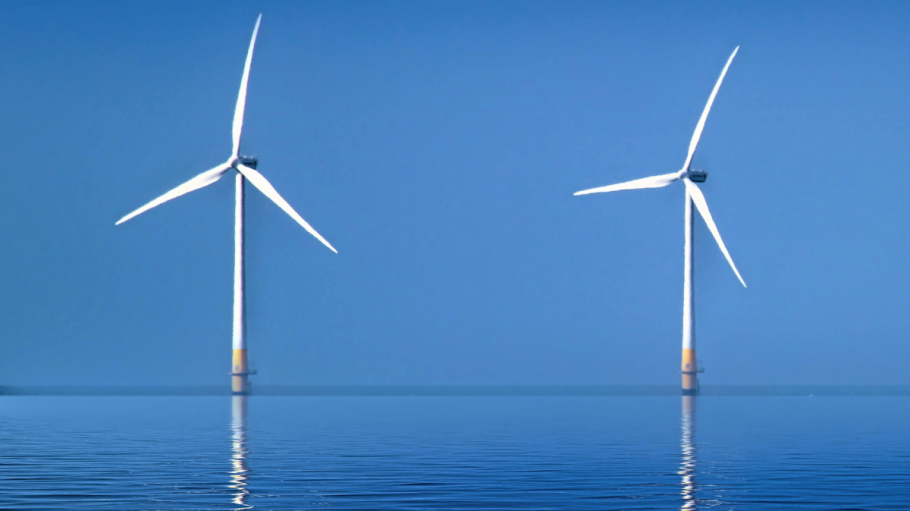
The industry also calls for a stronger and more predictable demand signal, including higher minimum shares of low-carbon steel in public procurement and support schemes, and a broader scope covering strategic sectors such as wind energy and electrical steel components.
Without these improvements, the IAA risks shifting emissions and investment abroad rather than anchoring them in Europe, weakening both industrial competitiveness and the EU’s strategic autonomy.
Contact
David French, Spokesperson and Head of Communications, +32 2 738 79 35, (d.french@eurofer.eu)
About the European Steel Association (EUROFER)
EUROFER AISBL is located in Brussels and was founded in 1976. It represents the entirety of steel production in the European Union. EUROFER members are steel companies and national steel federations throughout the EU. The major steel companies and national steel federation of Turkey, Ukraine and the United Kingdom are associate members.
The European Steel Association is recorded in the EU transparency register: 93038071152-83.
About the European steel industry
The European steel industry is a world leader in innovation and environmental sustainability. It has a turnover of around €215 billion and directly employs around 298,000 highly-skilled people, producing on average 146 million tonnes of steel per year. More than 500 steel production sites across 22 EU Member States provide direct and indirect employment to millions more European citizens. Closely integrated with Europe’s manufacturing and construction industries, steel is the backbone for development, growth and employment in Europe.
Steel is the most versatile industrial material in the world. The thousands of different grades and types of steel developed by the industry make the modern world possible. Steel is 100% recyclable and therefore is a fundamental part of the circular economy. As a basic engineering material, steel is also an essential factor in the development and deployment of innovative, CO2-mitigating technologies, improving resource efficiency and fostering sustainable development in Europe.
Download files or visit links related to this content
Steel in Action 2026
Brussels 17 July 2026 - Statement by EUROFER Director General Axel Eggert on the European Commission's proposal to revise the EU Emissions Trading System (ETS):
Brussels, 16 July 2026 - Ahead of the European Commission's review of the EU Emissions Trading System (ETS), the European Steel Association (EUROFER) reaffirmed its support for the EU's climate neutrality objective by 2050, while warning that the ETS can only succeed if it is adapted to market realities and accompanied by the enabling conditions needed for industrial decarbonisation.
The European Steel Association (EUROFER)
172 Avenue de Cortenbergh
1000 Brussels
Belgium
Email: mail@eurofer.eu
Phone: +32 (0) 2 738 79 20