Brussels 17 July 2026 - Statement by EUROFER Director General Axel Eggert on the European Commission's proposal to revise the EU Emissions Trading System (ETS):
With almost full free allocation phase-out by the end of 2033, the European Commission expects Europe's steel industry to decarbonise by then.
Yet the biggest question remains unanswered: where will the affordable electricity and hydrogen come from? Companies are still being asked to invest billions without knowing whether the electricity and hydrogen infrastructure will be ready, whether sufficient clean electricity will be available, or whether they will be delivered across the EU at prices that keep European steel and its downstream value chains globally competitive.
The proposed adjustment of the free allocation phase-out does not remove the investment uncertainty facing the industry. The reduction in free allocation for steel around 2029-2030 remains largely unchanged, while the benchmark rules still risk a sharp cut to the main steel benchmark in 2031, reducing both carbon leakage protection and rewards for first movers.
The long-promised structural solution for CBAM exports is still missing, and the new free allocation conditionality introduces additional administrative burden and legal uncertainty - particularly where investment decisions rely on conditions beyond the direct control of companies.
The EU has rightly set ambitious climate targets, but it has yet to deliver the enabling conditions it repeatedly promised across all Member States. Without those conditions, the ETS sets a deadline, but not necessarily a credible pathway to achieve it.
The European steel industry is already investing to replace 35% of conventional steelmaking capacity with hydrogen-ready plants by 2030-2032. But it is a fantasy to believe it will reach 100% by 2033 without the right enabling conditions. If the EU fails to deliver on its promises, it risks losing a significant part of its steel industry instead of decarbonising it.
Contact
David French, Spokesperson and Head of Communications, +32 2 738 79 35, (d.french@eurofer.eu)
About the European Steel Association (EUROFER)
EUROFER AISBL is located in Brussels and was founded in 1976. It represents the entirety of steel production in the European Union. EUROFER members are steel companies and national steel federations throughout the EU. The major steel companies and national steel federation of Turkey, Ukraine and the United Kingdom are associate members.
The European Steel Association is recorded in the EU transparency register: 93038071152-83.
About the European steel industry
The European steel industry is a world leader in innovation and environmental sustainability. It has a turnover of around €215 billion and directly employs around 298,000 highly-skilled people, producing on average 146 million tonnes of steel per year. More than 500 steel production sites across 22 EU Member States provide direct and indirect employment to millions more European citizens. Closely integrated with Europe’s manufacturing and construction industries, steel is the backbone for development, growth and employment in Europe.
Steel is the most versatile industrial material in the world. The thousands of different grades and types of steel developed by the industry make the modern world possible. Steel is 100% recyclable and therefore is a fundamental part of the circular economy. As a basic engineering material, steel is also an essential factor in the development and deployment of innovative, CO2-mitigating technologies, improving resource efficiency and fostering sustainable development in Europe.
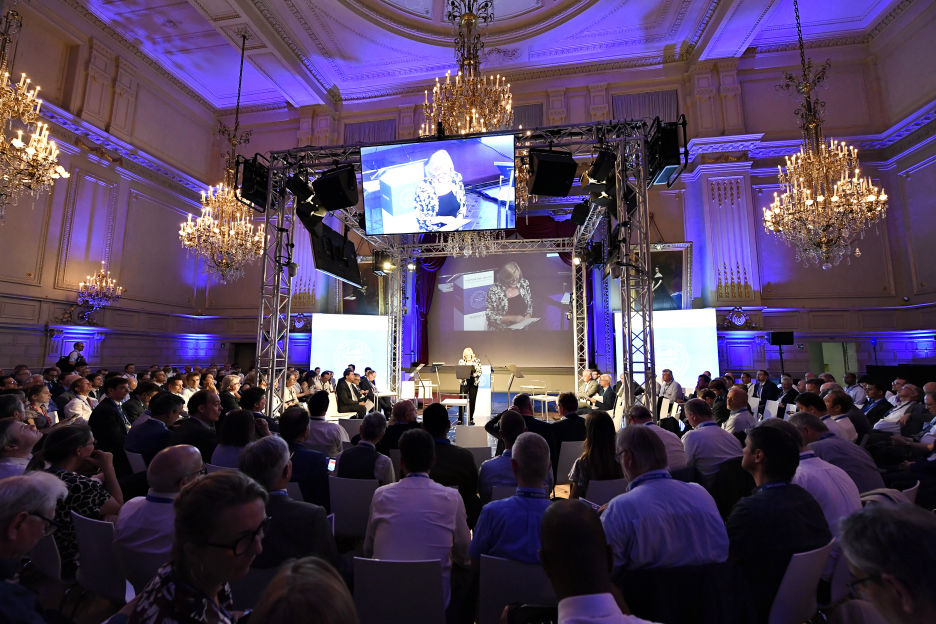
Steel in Action 2026
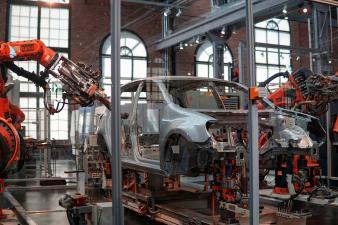
Proposed credit would allow European carmakers to meet 3% of their CO₂ targets through low-carbon steel made in the EU rising to 7.5% from 2035.
Brussels, 21 October 2026 - The European steel industry welcomes a compromise reached in the European Parliament yesterday on CO₂ standards for cars and vans, which includes a dedicated incentive for carmakers to use low-carbon steel Made in the EU.
As EU steel production rises, helping preserve up to 80,000 jobs, the industry reports €3.4 billion in investment decisions, with a further €2.4 billion expected by year-end.
The European Steel Association (EUROFER)
172 Avenue de Cortenbergh
1000 Brussels
Belgium
Email: mail@eurofer.eu
Phone: +32 (0) 2 738 79 20