Steel is a fundamental pillar of a healthy economy, essential for infrastructure, construction, and industrial development. Industrialisation typically starts with the establishment of a domestic steel industry.
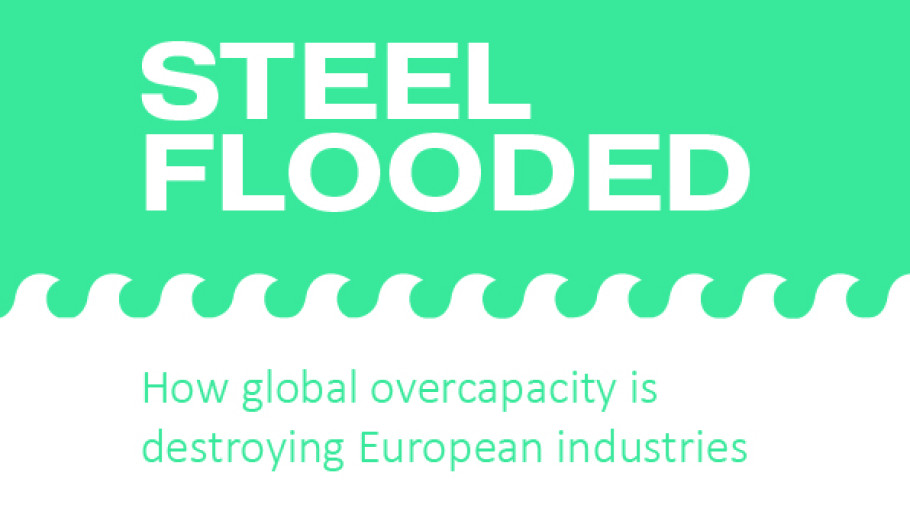
However, some formerly developing countries struggle to scale down their steel production once they reach a mature industrial stage. Meanwhile, other countries continue to expand their steel industries, often guided by government strategies aimed at boosting exports. This dynamic has led to production capacities far exceeding global demand.
As of 2024, global steel overcapacity exceeded 602 million tonnes - more than 4 times the EU’s total annual steel consumption – and is projected to rise to 721 million tonnes by 2027. Despite the growing mismatch, capacity reductions are frequently delayed or avoided due to government intervention, resulting in entrenched structural overcapacity and significant market distortions.
As a consequence, EU steel trade deficit has massively widened since 2021. A positive trade balance in finished steel products of 11 million tonne in 2013 has turned into a deficit of 10.7 million tonnes in 2024.
Find out more details in our full fact-sheet available for download below, covering:
Download this publication or visit associated links
Brussels, 12 June 2026 - Europe's steel industry has noted improvements made by EU ministers to the proposed reform of the Carbon Border Adjustment Mechanism (CBAM), but warns loopholes remain that could weaken both Europe's climate ambitions and industrial competitiveness.
EUROFER’s Annual Report 2026 sets out the key economic trends, policy developments and challenges shaping the future of the European steel industry today.
Brussels, 4 June 2026: One year after the United States imposed 50% tariffs on steel imports, European steel exports to the U.S. are down by one-third according to latest figures by the European Steel Association (EUROFER).
The European Steel Association (EUROFER)
172 Avenue de Cortenbergh
1000 Brussels
Belgium
Email: mail@eurofer.eu
Phone: +32 (0) 2 738 79 20