Publications » Position papers » Joint Position Paper on the EU Electrification Action Plan
Joint Position Paper on the EU Electrification Action Plan
Downloads and links
Recent updates
As shown by the Powerbarometer 2025, demand for electrons is at an impasse with a negligible 1% YoY growth in 2024 while plant closures and idling have been manifesting repeatedly across all sectors and countries of the EU. This is translating in both slackening of our decarbonization efforts, and loss of international competitiveness. Years after the outbreak of the energy crunch and the adoption of several initiatives at EU and national level, our sectors, which make up a substantial bulk of the EU total electricity demand, are still facing high electricity costs, in particular high wholesale market prices (the decoupling of fossil-fuel prices is not materializing fast enough), a tight PPA market and rising overall system costs associated with clean energy investments and security of supply (i.e., network charges, RES and CRM financing, and taxes and levies).
As recently stated in Morningstar Electrification Observer (11/2025) “[...] Europe faces the uncomfortable reality of paying the price for decarbonisation without fully capturing its benefits. With power prices expected to remain structurally high, the continent risks being stuck in an expensive and politically fragile transition — too costly to abandon, yet too slow to deliver” as “[...] prohibitively high electricity prices continue to undermine both household adoption of clean technologies and industrial competitiveness".
The European Commission is in the process of adopting its Electrification Action Plan (EAP) for stimulating and boosting electricity consumption in sectors covered by the Renewable Energy Directive III, namely transport and heating/cooling and most importantly industry. The impasse affecting electricity consumption and investment in electrification technologies in the EU is primarily due to high energy costs and as such this shall be the main focus of the EAP, considering the minimum effects produced so far by recent EU initiatives.
The EAP should therefore be a constructive occasion for the EU in pursuing decarbonization and industrial competitiveness by:
a) First and foremost, restoring as soon as possible competitive electricity prices and shielding energy-intensive sectors from total system costs beyond the approaches and measures adopted so far in the Electricity Markets Design Reform, the Clean Industrial Deal and the Action Plan on Affordable Energy;
b) Secondly, creating the enabling conditions to invest and to roll-out new electrification technologies in industrial processes;
c) Thirdly, speed up the realization of the EU Single Market for Energy by increasing interconnectivity and maximizing cross-border trading capacity among the Member States as structural solution to distribute the benefits of the renewable energy transition;
d) Fourthly, incentivise flexibility, predominantly from the supply side, promoting the contribution of all renewable and low-carbon energy sources that can meaningfully contribute to climate neutrality as well as from other flexible technologies with a clear untapped potential. Enhancing flexibility and adopting a technology-neutral approach could play a significant role in reducing electricity prices in the short-term and could offer a more effective response to the energy cost disparities with non-EU countries.
With the present joint position paper, the signatories wish to recommend certain measures to make the EAP fit-for-purpose for energy-intensive industries and for the electrification of the EU.
Download the full paper through the button below.
As EU steel production rises, helping preserve up to 80,000 jobs, the industry reports €3.4 billion in investment decisions, with a further €2.4 billion expected by year-end.
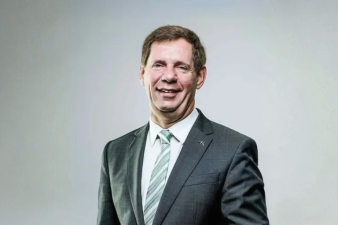
Brussels, 1 October 2026 - The European Steel Association (EUROFER) has elected Geert Van Poelvoorde, Chairman of the Board of ArcelorMittal Europe Steel, as its new President. Taking office today, Mr Van Poelvoorde said stronger home markets across the steel value chain, secure access to export markets and a strong industrial base will be essential to delivering on the European Union’s ambitions for global competitiveness and strategic autonomy.
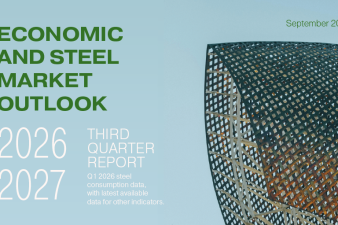
Brussels, 1 October 2026 - Europe’s steel market remains under significant pressure, with exports falling sharply, production at historic lows and demand expected to remain almost flat in 2026, according to the European Steel Association’s (EUROFER) latest Economic and Steel Market Outlook 2026-2027. EU steel exports to third countries fell by 20% in the first half of 2026, with declines across all major export destinations covered by the report. At the same time, crude steel production continued to falter, after reaching a historic low of 125.8 million tonnes in 2025, while apparent steel consumption is forecast to grow by just 0.1% in 2026, before increasing by 2.3% in 2027.
The European Steel Association (EUROFER)
172 Avenue de Cortenbergh
1000 Brussels
Belgium
Email: mail@eurofer.eu
Phone: +32 (0) 2 738 79 20