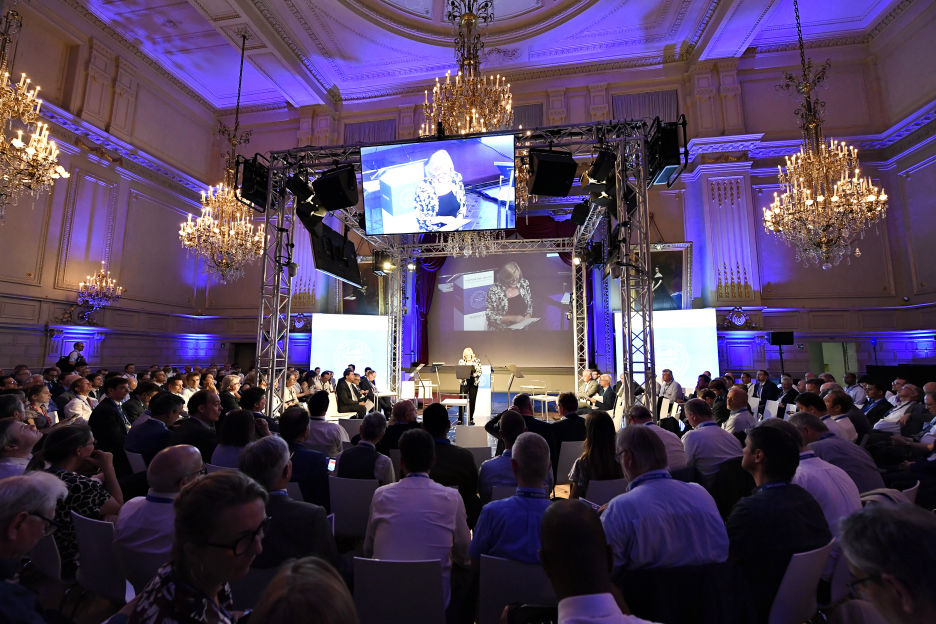
Strasbourg, 07 October 2025 – The new trade measure presented today by the European Commission is a long-awaited proposal to forcefully defend the European steel sector, in full respect of WTO rules, from unfair imports flooding the EU market due to massive global overcapacity. The provisions unveiled by the Commission respond to the needs of the sector and represent a real lifeline for EU steelmakers and steelworkers. The European Parliament and the Council should therefore adopt it as a matter of urgency to enable its entry into force at the beginning of 2026, says the European Steel Association (EUROFER).
Joint Statement
Brussels, 22 October - Ahead of the European Council meeting on 23 October, Europe’s steel and automotive industries — two strategic pillars of the EU economy — are issuing a joint call for a realistic and pragmatic pathway to transformation and keeping investments in Europe. Together, these sectors form the backbone of Europe’s industrial strength, supporting over 13 million jobs in automotive and 2.5 million in steel (directly and indirectly), and driving innovation across entire value chains.
Brussels, 20 November 2025 – Today the European Steel Association (EUROFER) elected its new Board, President and Vice-Presidents (see Annex). Henrik Adam was confirmed as President of the organisation for another two-year term.
Brussels, 27 November 2025 - The European ceramic, aluminium, ferro-alloys and steel industries express their deep concern about the potential impact of the EU-India FTA on strategic European industries if a sector-specific approach is not adopted and our sectors’ challenges are not duly considered.
Fourth quarter 2025 report. Data up to, and including, second quarter 2025
Brussels, 02 December 2025 – Unchanged negative conditions – U.S. tariffs and trade disruptions, economic and geopolitical tensions, protracted weak demand and still high energy prices – continue to weigh on the European steel market. EUROFER’s latest Economic and Steel Market Outlook confirms for 2025 another recession in both apparent steel consumption (-0.2%, unchanged) and steel-using sectors (-0.5%, revised from -0.7%). A potential recovery is expected only in 2026 for the Steel Weighted Industrial Production index (SWIP) (+1.8%, stable) and for apparent steel consumption (+3%, slightly revised from +3.1%) – although consumption volumes would still remain well below pre-pandemic levels. Steel imports retained historically high shares (27%), while exports plummeted (-9%) in the first eight months of 2025.
A milestone occasion to quickly and effectively restore affordable electricity, to relaunch the
decarbonization and strengthen the international competitiveness of the European steel
industry.