European steel industry restarts 10 million tonnes of capacity in 2026
European steel industry restarts 10 million tonnes of capacity in 2026
Recent updates
As EU steel production rises, helping preserve up to 80,000 jobs, the industry reports €3.4 billion in investment decisions, with a further €2.4 billion expected by year-end.
Brussels, 13 October 2026 - One hundred days after the EU's new steel trade measure entered into force, Europe's steel industry is showing early signs of renewed confidence. Around 10 million tonnes of crude steelmaking capacity have resumed production and at least €3.4 billion in investment decisions have already been taken in 2026.
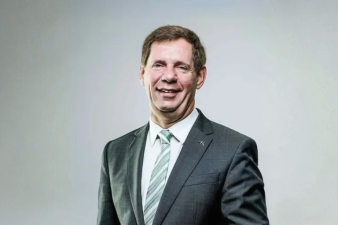
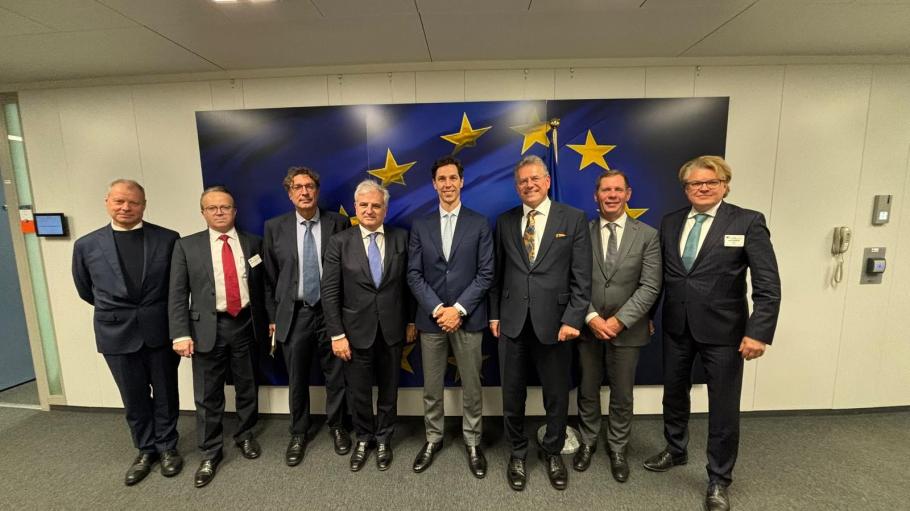
These developments were discussed yesterday between the newly elected President of the European Steel Association (EUROFER), Geert van Poelvoorde, EUROFER's Vice-Presidents and Maroš Šefčovič, European Commissioner for Trade and Economic Security.
Introduced on 1 July, the trade measure was introduced in response to mounting global steel overcapacity impacting the EU market. In 2025 alone, EU steel imports rose by 14%, while EU production fell to a historic low of 125.8 million tonnes. To protect EU steelmaking capacity and jobs, the trade measure allows no more than 18.3 million tonnes of tariff-free steel to enter the EU each year. The EU remains the largest import market for steel globally but the revised Tariff Rate Quota (TRQ) avoids surges above that level by applying a 50% tariff.
While it is too early to fully assess its impact, the initial signals are encouraging:
However, these are early signs of stabilisation, not yet a sustained recovery. EUROFER's latest Economic and Steel Market Outlook 2026–2027 shows that EU steel exports fell by 9 million tonnes between 2018 and 2025, followed by a further 20% decline in the first half of 2026 compared with the same period last year. EU steel demand is expected to grow by just 0.1% this year.
Geert van Poelvoorde, President of EUROFER, said: “The new EU steel trade measure has given our industry much-needed breathing space. After years of decline, steelmaking capacity is restarting, investment decisions are being taken and stability is beginning to return. But stabilisation is not recovery. The EU has taken an essential first step and we now call on EU leaders to build on this progress. We need to shield the measure from any form of circumvention by exporters to the EU and deliver the enabling conditions needed for our industry’s transformation to climate neutrality, which include internationally competitive energy prices, fair carbon emission costs for European industry, an effective Carbon Border Adjustment Measure, and stronger lead markets for steel ‘Made in the EU.”
The meeting was also attended by EUROFER Vice-Presidents Mario Arvedi Caldonazzo (CEO, Arvedi Group), Tim Di Maulo (Member of the Board, Aperam), Lorenzo Riva (CEO, Riva Group), and Miroslav Kiral'varga (Vice President, Nippon Steel Slovakia), alongside EUROFER Director General Axel Eggert.
Contact
David French, Spokesperson and Head of Communications, +32 2 738 79 35, (d.french@eurofer.eu)
About the European Steel Association (EUROFER)
EUROFER AISBL is located in Brussels and was founded in 1976. It represents the entirety of steel production in the European Union. EUROFER members are steel companies and national steel federations throughout the EU. The major steel companies and national steel federation of Turkey, Ukraine and the United Kingdom are associate members.
The European Steel Association is recorded in the EU transparency register: 93038071152-83.
About the European steel industry
The European steel industry is a world leader in innovation and environmental sustainability. It has a turnover of around €215 billion and directly employs around 298,000 highly-skilled people, producing on average 146 million tonnes of steel per year. More than 500 steel production sites across 22 EU Member States provide direct and indirect employment to millions more European citizens. Closely integrated with Europe’s manufacturing and construction industries, steel is the backbone for development, growth and employment in Europe.
Steel is the most versatile industrial material in the world. The thousands of different grades and types of steel developed by the industry make the modern world possible. Steel is 100% recyclable and therefore is a fundamental part of the circular economy. As a basic engineering material, steel is also an essential factor in the development and deployment of innovative, CO2-mitigating technologies, improving resource efficiency and fostering sustainable development in Europe.
Brussels, 1 October 2026 - The European Steel Association (EUROFER) has elected Geert Van Poelvoorde, Chairman of the Board of ArcelorMittal Europe Steel, as its new President. Taking office today, Mr Van Poelvoorde said stronger home markets across the steel value chain, secure access to export markets and a strong industrial base will be essential to delivering on the European Union’s ambitions for global competitiveness and strategic autonomy.
Brussels, 1 October 2026 - Europe’s steel market remains under significant pressure, with exports falling sharply, production at historic lows and demand expected to remain almost flat in 2026, according to the European Steel Association’s (EUROFER) latest Economic and Steel Market Outlook 2026-2027. EU steel exports to third countries fell by 20% in the first half of 2026, with declines across all major export destinations covered by the report. At the same time, crude steel production continued to falter, after reaching a historic low of 125.8 million tonnes in 2025, while apparent steel consumption is forecast to grow by just 0.1% in 2026, before increasing by 2.3% in 2027.
Ship recycling
The European Steel Association (EUROFER)
172 Avenue de Cortenbergh
1000 Brussels
Belgium
Email: mail@eurofer.eu
Phone: +32 (0) 2 738 79 20