Despite structural weak steel demand in Europe, imports continue to gain market share. Apparent consumption of flat steel products fell to around 76m tonnes in 2024, well below the 91m tonnes in 2018. At the same time, import penetration continues to rise. Imports of hot-rolled coil - a key benchmark steel product - now account for more than 40% of the EU market.
The new trade measure currently under negotiation introduces a tariff-rate quota (TRQ) system, allowing controlled volumes of steel imports to enter the EU tariff-free while preventing market disruption caused by global steel overcapacity. The OECD estimates global excess steelmaking capacity at around 650m tonnes, posing one of the most serious threats to the viability of European steel production.
EUROFER says the Commission’s proposal is carefully balanced, keeping the EU market open while ensuring European production, jobs and industrial capacity remain viable. Axel Eggert, Director General of EUROFER, said: “Global steel overcapacity is an existential threat to European steelmaking. The European Commission’s proposal is both balanced and effective. It must be adopted without delay and without being weakened.”
A key element of the proposal is the non-carry-over rule, which prevents unused quarterly import quotas from being rolled over into later periods. This condition is critical for the effectiveness of the proposed measure because allowing carry-overs would encourage speculative import behaviour leading to sudden surges of imports that destabilise the European market - a problem already experienced under the current EU steel safeguard system.
The proposal under negotiation also includes a review mechanism, allowing the European Commission to adjust quota levels if evidence proves changes are needed. This mechanism is in the interest of all market operators.
EUROFER therefore calls on the European Parliament and the Council, currently negotiating the proposal, to adopt the measure in its current form and avoid weakening its key provisions.
It is essential that the new system enters into force before the current EU steel safeguard expires at the end of June 2026.
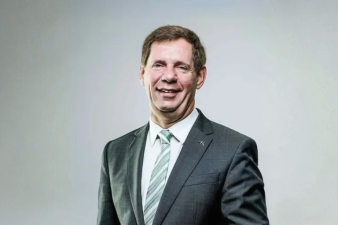
Brussels, 1 October 2026 - The European Steel Association (EUROFER) has elected Geert Van Poelvoorde, Chairman of the Board of ArcelorMittal Europe Steel, as its new President. Taking office today, Mr Van Poelvoorde said stronger home markets across the steel value chain, secure access to export markets and a strong industrial base will be essential to delivering on the European Union’s ambitions for global competitiveness and strategic autonomy.
Brussels, 1 October 2026 - Europe’s steel market remains under significant pressure, with exports falling sharply, production at historic lows and demand expected to remain almost flat in 2026, according to the European Steel Association’s (EUROFER) latest Economic and Steel Market Outlook 2026-2027. EU steel exports to third countries fell by 20% in the first half of 2026, with declines across all major export destinations covered by the report. At the same time, crude steel production continued to falter, after reaching a historic low of 125.8 million tonnes in 2025, while apparent steel consumption is forecast to grow by just 0.1% in 2026, before increasing by 2.3% in 2027.
Ship recycling
The European Steel Association (EUROFER)
172 Avenue de Cortenbergh
1000 Brussels
Belgium
Email: mail@eurofer.eu
Phone: +32 (0) 2 738 79 20