News » Joint Statement: European social partners commit to working towards a competitive transition of the European steel sector
Joint Statement: European social partners commit to working towards a competitive transition of the European steel sector
Recent updates
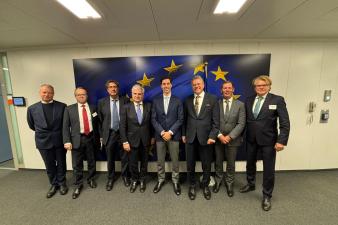
With energy and raw material costs remaining high, global overcapacity continuing to increase, and no end in sight for the cost-of-living crisis in Europe, the European steel social partners, industriAll European Trade Union and EUROFER commit to continue to work together to support the twin green and digital transition of the European steel industry and its workers.
European steel is essential for the green transition and is at the heart of European industry providing 310,000 direct, and 2.2 million indirect jobs, in the EU. Ahead of the EU elections in 2024, various pieces of EU legislation need to be finalised with the aim of ensuring a more sustainable future for the steel industry in Europe.
Now more than ever, the European steel sector and its workers need to see increased support for investment to ensure that the green and digital transitions are managed successfully with no steel worker or region being left behind.
European Social Partners:
The European Social Partners will continue to work together and with national and European policy makers to ensure the survival of the European steel sector.
27 November 2023
As EU steel production rises, helping preserve up to 80,000 jobs, the industry reports €3.4 billion in investment decisions, with a further €2.4 billion expected by year-end.
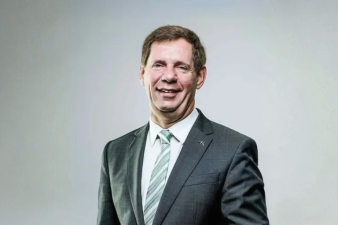
Brussels, 1 October 2026 - The European Steel Association (EUROFER) has elected Geert Van Poelvoorde, Chairman of the Board of ArcelorMittal Europe Steel, as its new President. Taking office today, Mr Van Poelvoorde said stronger home markets across the steel value chain, secure access to export markets and a strong industrial base will be essential to delivering on the European Union’s ambitions for global competitiveness and strategic autonomy.
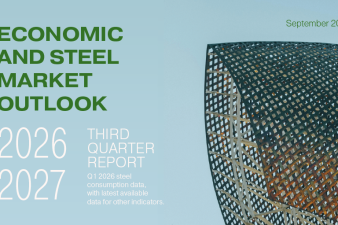
Brussels, 1 October 2026 - Europe’s steel market remains under significant pressure, with exports falling sharply, production at historic lows and demand expected to remain almost flat in 2026, according to the European Steel Association’s (EUROFER) latest Economic and Steel Market Outlook 2026-2027. EU steel exports to third countries fell by 20% in the first half of 2026, with declines across all major export destinations covered by the report. At the same time, crude steel production continued to falter, after reaching a historic low of 125.8 million tonnes in 2025, while apparent steel consumption is forecast to grow by just 0.1% in 2026, before increasing by 2.3% in 2027.
The European Steel Association (EUROFER)
172 Avenue de Cortenbergh
1000 Brussels
Belgium
Email: mail@eurofer.eu
Phone: +32 (0) 2 738 79 20