News » Launch of the Clean Steel Partnership paves the way for further research and deployment of ground-breaking technology
Launch of the Clean Steel Partnership paves the way for further research and deployment of ground-breaking technology
Downloads and links
Recent updates
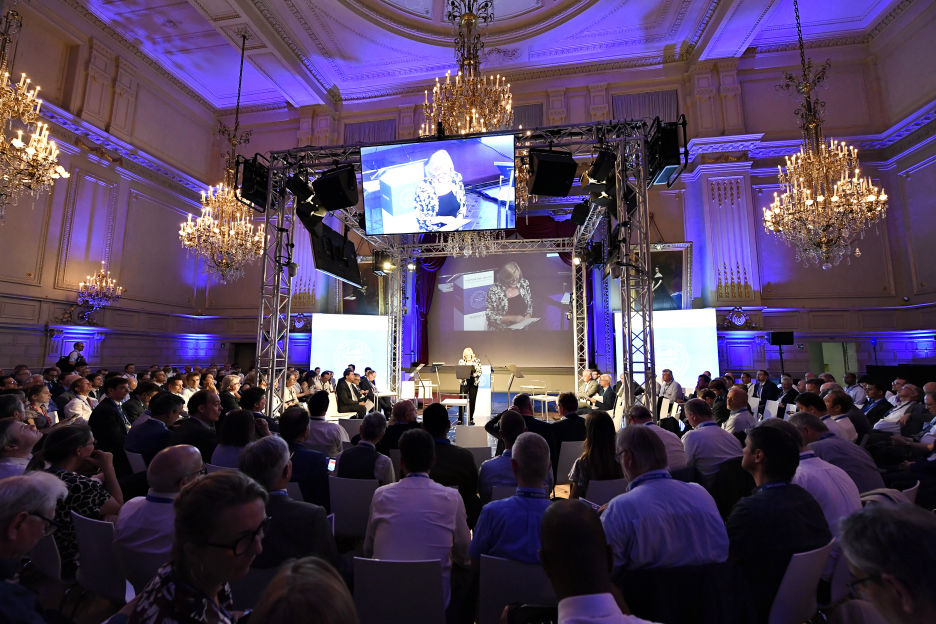
The Clean Steel Partnership was formally launched today and the Memorandum of Understanding will be ‘e-signed’ by representatives of the European Commission and the European Steel Technology Platform (ESTEP) in the coming weeks. ESTEP is the research-oriented sister organisation of EUROFER.
The Clean Steel Partnership is a mechanism to pilot and demonstrate breakthrough technologies up to Technology Readiness Level (TRL) 8 that can reduce CO2 emissions stemming from EU steel.
Aligned with the European Green Deal targets, the partnership supports EU leadership in transforming the steel industry into a carbon-neutral one, serving as a catalyser for other strategic sectors. By 2027 it will implement at least two demonstration projects that could cut CO2 emissions by 50% compared to 1990 levels and achieve technology readiness level 8 by 2030 in at least twelve areas funded by the partnership.
The final ambition is to reduce CO2 emissions by 80-95% by 2050, ultimately achieving carbon neutrality.
CSP is unique due its two financing pillars: Horizon Europe and the Research Fund for Coal and Steel (RFCS), which until now has been largely used for incremental research funding.
The ESTEP-EUROFER secretariats have been working closely on this project, alongside the European Commission, since December 2019 to find an acceptable structure for the Clean Steel Partnership and appropriate wording for the Memorandum of Understanding.
The success of the partnership could support European steel industry’s role as an important engine of sustainable growth, added-value and high-quality employment in the EU – supporting its competitiveness and that of its downstream sectors, such as automotive, construction and energy generation.
Speaking during the ceremony, EUROFER Director General Axel Eggert said,:
"This is a great day for Europe and for the European steel industry.
The Clean Steel Partnership will help Europe on its way to climate neutrality. It will help the European steel industry as a key strategic industry for Europe to reach its ambitious climate objectives: reducing carbon emissions from steelmaking by 30% already in 2030 and moving our sector towards carbon neutrality by 2050.
The partnership will develop the necessary technologies at High Technology Readiness Level, with an EU contribution of 700 million € and a private commitment of up to 1 billion €.
The partnership is an important piece in the EU’s and our industry’s overall climate strategy. To make it a success, markets for low-carbon steel will have to be established as soon as possible and still during this decade.
Low-carbon products will have to compete with more carbon intensive products on the internal and on global markets.
It is therefore essential that the legislative framework within the Fit-for 55 package that is expected to be adopted by the European Commission on 14 July effectively addresses the risk of carbon leakage and secures a smooth transition allowing companies to invest, scale up and roll-out the innovative, low-carbon technologies.
The Clean Steel partnership is looking forward to contributing to master the challenge of decarbonisation.
Finally, I wish to thank the Commission and Commission services for having set up this partnership together with the European steel community."
For more information on the Clean Steel Partnership, please visit https://www.estep.eu/assets/Uploads/200715-CSP-Roadmap-version-public-consultation.pdf
Download files or visit links related to this content
Steel in Action 2026
Brussels 17 July 2026 - Statement by EUROFER Director General Axel Eggert on the European Commission's proposal to revise the EU Emissions Trading System (ETS):
Brussels, 16 July 2026 - Ahead of the European Commission's review of the EU Emissions Trading System (ETS), the European Steel Association (EUROFER) reaffirmed its support for the EU's climate neutrality objective by 2050, while warning that the ETS can only succeed if it is adapted to market realities and accompanied by the enabling conditions needed for industrial decarbonisation.
The European Steel Association (EUROFER)
172 Avenue de Cortenbergh
1000 Brussels
Belgium
Email: mail@eurofer.eu
Phone: +32 (0) 2 738 79 20