Publications » Economic and market outlook » Economic and Steel Market Outlook 2026-2027 report Q2
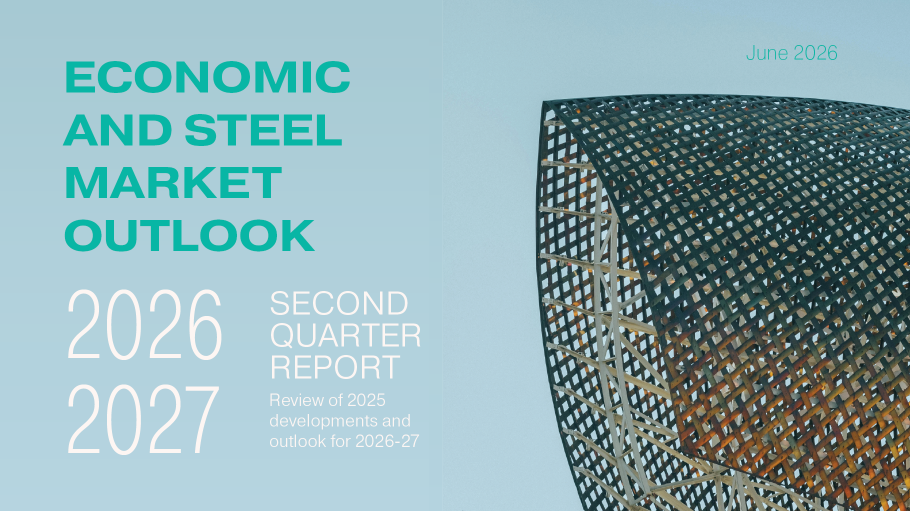
Economic and Steel Market Outlook 2026-2027 report: European steel market faces another difficult year despite modest demand growth
Downloads and links
Recent updates
Apparent steel consumption increased by 4.4% in 2025. However, the rebound was largely driven by exceptional factors and does not signal a sustained recovery. Demand remains around 10 million tonnes below pre-pandemic levels, while growth is expected to slow sharply to just 0.4% in 2026.
Axel Eggert, Director enral of the European Steel Association (EUROFER), "Modest improvements in demand should not be mistaken for a genuine recovery. Manufacturing remains weak, energy costs remain elevated, and uncertainty linked to global trade and geopolitical tensions continues to weigh on investment and industrial activity."
Steel demand recovers, but growth remains fragile
Despite stronger-than-expected growth in apparent steel consumption in 2025, the recovery remains weak. Growth is expected to remain almost flat in 2026 before improving only gradually in 2027.
Industrial demand remains under pressure
Demand from steel-using sectors declined again in 2025 (-0.1%), marking a second consecutive year of contraction. Although a modest improvement is forecast for 2026 (+1.3%), a more meaningful recovery is not expected before 2027.
Automotive weakness continues to weigh on recovery
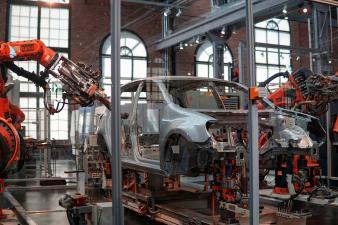
The automotive sector - one of Europe's most important steel-using industries - remains a major source of concern. Output fell sharply in 2024 and continued to decline in 2025, reflecting weak consumer demand, slower-than-expected electric vehicle uptake and persistent uncertainty affecting manufacturers. The sector is expected to remain under pressure throughout 2026.
Construction remains the main source of resilience
Construction, Europe's largest steel-consuming sector, continues to provide some support to demand. However, growth remains modest and faces increasing headwinds from higher financing costs and a weakening economic environment.
Global uncertainty continues to cloud the outlook
The broader economic environment remains challenging. Rising energy prices linked to tensions in the Middle East have reignited inflationary pressures and prompted further monetary tightening, while industrial output in several major EU economies remains below pre-pandemic levels.
Although imports eased somewhat in early 2026 following exceptionally high levels at the end of last year, global steel overcapacity and intense international competition continue to weigh heavily on European producers.
Without stronger industrial growth, improved competitiveness and lower energy costs, EUROFER expects Europe's steel market to remain under pressure for the foreseeable future.
Download this publication or visit associated links
Proposed credit would allow European carmakers to meet 3% of their CO₂ targets through low-carbon steel made in the EU rising to 7.5% from 2035.
Brussels, 21 October 2026 - The European steel industry welcomes a compromise reached in the European Parliament yesterday on CO₂ standards for cars and vans, which includes a dedicated incentive for carmakers to use low-carbon steel Made in the EU.
As EU steel production rises, helping preserve up to 80,000 jobs, the industry reports €3.4 billion in investment decisions, with a further €2.4 billion expected by year-end.
Brussels, 1 October 2026 - The European Steel Association (EUROFER) has elected Geert Van Poelvoorde, Chairman of the Board of ArcelorMittal Europe Steel, as its new President. Taking office today, Mr Van Poelvoorde said stronger home markets across the steel value chain, secure access to export markets and a strong industrial base will be essential to delivering on the European Union’s ambitions for global competitiveness and strategic autonomy.
The European Steel Association (EUROFER)
172 Avenue de Cortenbergh
1000 Brussels
Belgium
Email: mail@eurofer.eu
Phone: +32 (0) 2 738 79 20