Publications » Position papers » Carbon Border Adjustment - EUROFER contribution to the public consultation
Carbon Border Adjustment - EUROFER contribution to the public consultation
Downloads and links
Recent updates
Deep emission reductions are technically achievable in the EU steel industry only with the right framework in place, including support for investment in innovation and roll-out, the
creation of markets for green materials, the availability of the competitive low carbon energy sources, an international level playing field, and the application of EU trade defence
instruments against trade distortions.
Higher climate ambition, which will translate into higher carbon costs and emission reduction efforts, requires strengthened carbon leakage measures, in particular for sectors at highest risk due to high trade exposure and energy intensity such as steel.
Steel products sold on the EU market, whether produced in the EU or imported from third countries, need to have similar CO2 cost constraints. EU steel exports need also to have CO2 cost level playing field on global steel markets.
A well designed and effective CBA ensures that all emissions come with a cost, regardless of their country of origin, and provides strengthened carbon leakage protection only if it
complements and addresses the shortcomings of the existing measures, which shall be based on 100% of the benchmarks, without any reduction.
A CBA with full auctioning would have a disruptive impact on the EU steel industry and the related value chains, as it would expose EU steel producers and downstream sectors to the full carbon costs, undermining the financial ability to invest in low carbon technologies and jeopardising the competitiveness of EU exports.
In order to prevent carbon leakage, the CBA should be introduced in a way that the importer has on one side a comparable carbon cost level to the EU industry and on the other side a sufficiently high incentive to decarbonise, while addressing the risks of cost absorption and source shifting. The design of the CBA should also take into account the fact that EU producers are subject to the carbon costs for their entire production, while importers would be subject only for the quantities exported to the EU. Due to that, a CBA set at a too low level would not provide the sufficient carbon cost constraint to avoid carbon leakage.
Download this publication or visit associated links
Proposed credit would allow European carmakers to meet 3% of their CO₂ targets through low-carbon steel made in the EU rising to 7.5% from 2035.
Brussels, 21 October 2026 - The European steel industry welcomes a compromise reached in the European Parliament yesterday on CO₂ standards for cars and vans, which includes a dedicated incentive for carmakers to use low-carbon steel Made in the EU.
As EU steel production rises, helping preserve up to 80,000 jobs, the industry reports €3.4 billion in investment decisions, with a further €2.4 billion expected by year-end.
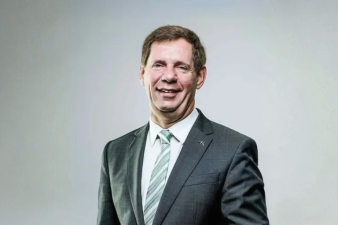
Brussels, 1 October 2026 - The European Steel Association (EUROFER) has elected Geert Van Poelvoorde, Chairman of the Board of ArcelorMittal Europe Steel, as its new President. Taking office today, Mr Van Poelvoorde said stronger home markets across the steel value chain, secure access to export markets and a strong industrial base will be essential to delivering on the European Union’s ambitions for global competitiveness and strategic autonomy.
The European Steel Association (EUROFER)
172 Avenue de Cortenbergh
1000 Brussels
Belgium
Email: mail@eurofer.eu
Phone: +32 (0) 2 738 79 20