Publications » Position papers » EUROFER response to recent CE Delft study
EUROFER response to recent CE Delft study
Downloads and links
Recent updates
A recent study by the consultancy CE Delft commissioned by Carbon Market Watch purports to have detected large windfall profits emerging from the European Union Emissions
Trading System (EU ETS). This response from the European steel industry seeks to determine how these conclusions were reached and to react to the claims.
Unfortunately, the study (and those on which it is based) has a number of methodological flaws. These include the omission of indirect costs in the calculation, the use of implausible data proxies and the underestimation of the impact of carbon costs. For these reasons, the study results in misleading conclusions.
More generally, the study provides a picture of the EU steel industry which is at odds with the everyday-reality of a sector which is highly exposed to an uneven international playing field and suffers from unfair practises, such as dumping and global overcapacity. These factors have led to job losses, decreasing prices and very low or negative profitability. Such reality clearly contradicts the claims of the study on cost pass through ability and windfall profits.
The European steel industry is committed to contributing fairly to EU climate and energy targets, taking into account also the exposure to fierce international competition and the need for a global playing field. We are committed to sustainable production and sale of high quality steels in Europe while ensuring high level job, but to continue to do this, there needs to be an open, fact-based discussion on the right regulatory regime and impact assessments.

Download this publication or visit associated links
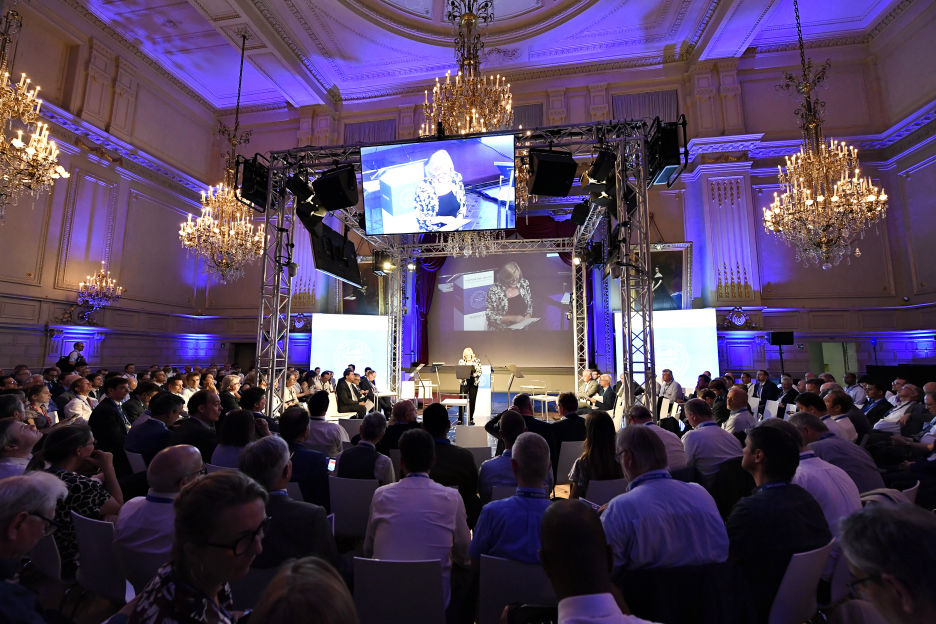
Brussels, 1 October 2026 - The European Steel Association (EUROFER) has elected Geert Van Poelvoorde, Chairman of the Board of ArcelorMittal Europe Steel, as its new President. Taking office today, Mr Van Poelvoorde said stronger home markets across the steel value chain, secure access to export markets and a strong industrial base will be essential to delivering on the European Union’s ambitions for global competitiveness and strategic autonomy.
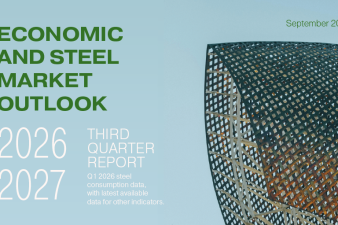
Brussels, 1 October 2026 - Europe’s steel market remains under significant pressure, with exports falling sharply, production at historic lows and demand expected to remain almost flat in 2026, according to the European Steel Association’s (EUROFER) latest Economic and Steel Market Outlook 2026-2027. EU steel exports to third countries fell by 20% in the first half of 2026, with declines across all major export destinations covered by the report. At the same time, crude steel production continued to falter, after reaching a historic low of 125.8 million tonnes in 2025, while apparent steel consumption is forecast to grow by just 0.1% in 2026, before increasing by 2.3% in 2027.
Ship recycling
The European Steel Association (EUROFER)
172 Avenue de Cortenbergh
1000 Brussels
Belgium
Email: mail@eurofer.eu
Phone: +32 (0) 2 738 79 20