Publications » Position papers » Steel crisis: urgent meeting and EU summit needed to discuss urgent solutions
Steel crisis: urgent meeting and EU summit needed to discuss urgent solutions
Downloads and links
Recent updates
Dear President von der Leyen,
Dear Executive Vice-President Séjourné,
The European steel industry is in crisis, with thousands of job cuts being recently announced, and billions of euros in decarbonisation plans currently being halted.
As such, industriAll European Trade Union and the European Steel Association (EUROFER), the EU social partners for the steel sector, request an urgent meeting with you both to discuss urgent solutions and our Steel Action Plan, which has been endorsed by MEPs across political groups and from different Member States.
The EU steel sector was already suffering from the ongoing energy and raw material crises, and on top of this, the EU market is once again being flooded by cheap foreign steel. In fact, following the economic crisis in China, it is estimated that around 100 million tonnes of Chinese steel are flooding major markets at dumping prices. This, combined with a record-high global steel excess capacity of 560 million tonnes, is catastrophic for the EU steel sector and its workers. However, the issue is bigger than only China, with other steel producing regions of the world, such as South Asia, the Middle East, India, and Japan, rerouting to the EU, depressing global steel prices, and endangering the survival of our sector and investments in the green transition.
Current EU trade defence instruments (TDIs) remain essential, but are unfortunately insufficient to tackle the spill-over of global steel overcapacity. As well as strengthening existing TDIs, the EU steel social partners call for short-term emergency measures and a new comprehensive EU trade initiative as a matter of urgency; import tariffication – taking into account WTO rules - is needed to tackle a double crisis, combining market-distorting export surges with extreme low prices.
With this in mind, we believe that this level of crisis requires a high-level “European Steel Summit”, and we ask you as the European Commission to organise this at the beginning of next year. The Summit should involve the steel social partners, Member States, and high-level officials from the EU institutions, with the aim to address the present crisis. The Summit would be instrumental in preparing the announced “Steel and Metals Action Plan”, as well as other initiatives aiming to lower energy prices, secure the effectiveness of CBAM, access to raw materials, a Just Transition, and to boost investments, such as the Clean Industrial Deal.
The Summit would allow the leaders of industriAll Europe and EUROFER, trade union leaders and CEOs of EU steel companies the opportunity to provide you with a detailed update on the dramatic state of play in our sector and to exchange on recommendations contained in the social partners’ “Steel Action Plan”. Joint cooperation is essential if we are to overcome these crises and save the steel sector and thousands of jobs.
We thank you for considering our meeting request at your earliest convenience and we look forward to your positive response.
Yours sincerely,
Judith Kirton-Darling
General Secretary
IndustriAll European Trade Union
Axel Eggert
Director General
The European Steel Association (EUROFER)
As EU steel production rises, helping preserve up to 80,000 jobs, the industry reports €3.4 billion in investment decisions, with a further €2.4 billion expected by year-end.
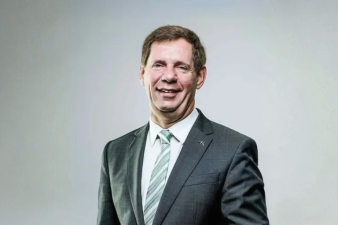
Brussels, 1 October 2026 - The European Steel Association (EUROFER) has elected Geert Van Poelvoorde, Chairman of the Board of ArcelorMittal Europe Steel, as its new President. Taking office today, Mr Van Poelvoorde said stronger home markets across the steel value chain, secure access to export markets and a strong industrial base will be essential to delivering on the European Union’s ambitions for global competitiveness and strategic autonomy.
Brussels, 1 October 2026 - Europe’s steel market remains under significant pressure, with exports falling sharply, production at historic lows and demand expected to remain almost flat in 2026, according to the European Steel Association’s (EUROFER) latest Economic and Steel Market Outlook 2026-2027. EU steel exports to third countries fell by 20% in the first half of 2026, with declines across all major export destinations covered by the report. At the same time, crude steel production continued to falter, after reaching a historic low of 125.8 million tonnes in 2025, while apparent steel consumption is forecast to grow by just 0.1% in 2026, before increasing by 2.3% in 2027.
The European Steel Association (EUROFER)
172 Avenue de Cortenbergh
1000 Brussels
Belgium
Email: mail@eurofer.eu
Phone: +32 (0) 2 738 79 20