News » EUROFER comments on the statement of certain European steel using industries on the proposed new steel trade measure to address steel overcapacity
EUROFER comments on the statement of certain European steel using industries on the proposed new steel trade measure to address steel overcapacity
Downloads and links
Recent updates
Maintaining a strong steel production base in the EU is essential for strategic autonomy, the green transition and the resilience of Europe’s industrial value chain avoiding over-dependency on foreign suppliers and government regimes that can cause higher risks and vulnerability. Against this backdrop, the Commission’s proposal should be seen as part of a broader effort to safeguard European industrial capacity and promote jobs, innovation, and climate objectives.
Fundamentally, the Commission’s proposal is perceived to lack balance in considering fairly the interests of operators throughout the steel value chain. EUROFER reminds that the immediate objective of the new trade measure is to reduce and stabilise steel imports at sustainable levels and prevent further trade spill-over from global overcapacity to protect and promote European industrial capacity. The design of the new measure considers carefully the interests of downstream sectors by opting for tariff-free quotas instead of a blanket tariff on each imported tonne, including review mechanism and opening up to steel-containing product inclusions like CBAM.
Specifically, concerns are expressed with regard to price impact, administrative burden of a “melt & pour” regime and continued sourcing of specialised high-quality steel inputs.
With regard to price impact, the new trade measure will not reduce supply that could inflate steel prices as decreasing imports will be replaced by domestic supply which is precisely the objective of the measure to ensure viable steel capacity utilisation.
Importers have an alternative to reducing imports through increased domestic supply while a TRQ still allows significant volumes to enter the EU market free of tariff.
Importantly, the TRQ will not stop EU steel prices from reflecting demand and international steel price conditions unlike the U.S. blanket of 50% on each tonne imported in the U.S. Overall, price shocks because of the new measure are unlikely as EU steel capacity utilisation remains low leaving sufficient margin to replace imports. If necessary, the proposed system can readjust.
With regard to “melt & pour”, identification of the installation where the steel is melted and poured is also a pre-condition for using real carbon intensity data under CBAM; in this respect, the new trade regime does not impose a new condition to imports.
With regard to continuity of sourcing of specialised products from countries that do not contribute to global overcapacity, such products are within much broader product category quotas with plenty of room for imports of these products volume-wise. Neighbour countries in particular that are closely operating in the European value chain can plan and secure EU imports having a logistic “first-come-first served” advantage.
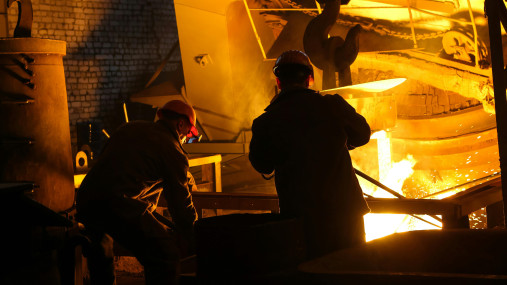
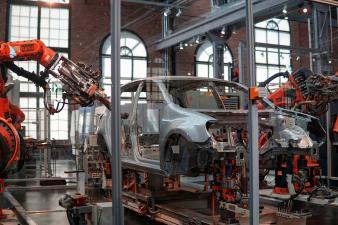
Proposed credit would allow European carmakers to meet 3% of their CO₂ targets through low-carbon steel made in the EU rising to 7.5% from 2035.
Brussels, 21 October 2026 - The European steel industry welcomes a compromise reached in the European Parliament yesterday on CO₂ standards for cars and vans, which includes a dedicated incentive for carmakers to use low-carbon steel Made in the EU.
As EU steel production rises, helping preserve up to 80,000 jobs, the industry reports €3.4 billion in investment decisions, with a further €2.4 billion expected by year-end.
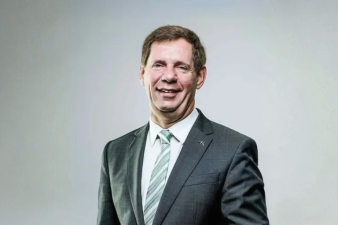
Brussels, 1 October 2026 - The European Steel Association (EUROFER) has elected Geert Van Poelvoorde, Chairman of the Board of ArcelorMittal Europe Steel, as its new President. Taking office today, Mr Van Poelvoorde said stronger home markets across the steel value chain, secure access to export markets and a strong industrial base will be essential to delivering on the European Union’s ambitions for global competitiveness and strategic autonomy.
The European Steel Association (EUROFER)
172 Avenue de Cortenbergh
1000 Brussels
Belgium
Email: mail@eurofer.eu
Phone: +32 (0) 2 738 79 20