Publications » Archive » European Steel in Figures 2020
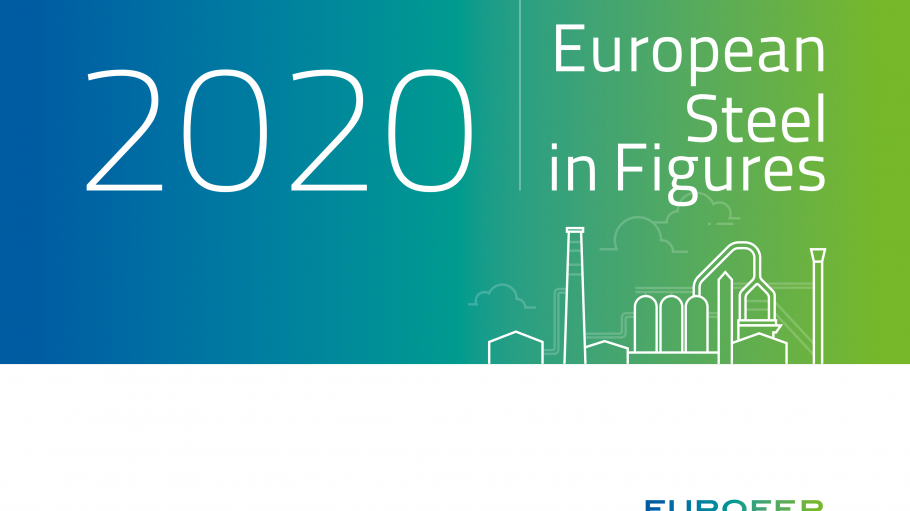
European Steel in Figures 2020
Downloads and links
Recent updates
European Steel in Figures 2020 is the European Steel Association’s (EUROFER) statistical guide. It shows a sector that has experienced a challenging year in 2019, with employment levels stable but demand beginning to fall off. In 2019, imports fell from the record rise seen in 2018 - in line with falling demand. The decline in production and demand will have an impact on future employment figures, as will the impact of the COVID-19 outbreak. Total employment – jobs directly or indirectly, or induced by the sector – now stands at 2.6 million. Total Gross Value Added is €140 billion.
This new European Steel in Figures 2020 guide updates the trade map, showing imports and exports from the EU in an easy-to-understand way, breaking down previously hard to read figures. Additionally, the sustainability section of the guide has been doubled in size and updated with the latest data, now including refreshed information on slag production by the steel industry and its use by other downstream sectors.
All these statistics help give an overview of the European steel industry today. Awareness of the employment, production, demand and trade challenges that face the sector ensure a greater understanding of our strategically important sector. With this in mind, I hope you enjoy using European Steel in Figures 2020.
Download this publication or visit associated links
Brussels, 3 April 2026 – The European Steel Association (EUROFER) has set out proposals to improve the EU’s Carbon Border Adjustment Mechanism (CBAM), just as the system enters a decisive new phase with the publication of the first carbon certificate prices expected on 7 April 2026.
Brussels, 25 March 2026 - The European Steel Association (EUROFER) has warned that the latest OECD data released in Paris today confirms a deepening global steel crisis and urged the EU to act swiftly to adopt its new steel trade measure.
The new Waste Shipment Regulation entered into force on 20 May 2024, with most of its provisions—including critical operational requirements—set to apply from 21 May 2026.
The European Steel Association (EUROFER)
172 Avenue de Cortenbergh
1000 Brussels
Belgium
Email: mail@eurofer.eu
Phone: +32 (0) 2 738 79 20