Publications » Position papers » Analysis and comments on Commission Draft Delegated Act for technical screening criteria for climate change mitigation and climate change adaptation concerning manufacture of iron and steel
Analysis and comments on Commission Draft Delegated Act for technical screening criteria for climate change mitigation and climate change adaptation concerning manufacture of iron and steel
Downloads and links
Recent updates
On 20 November the European Commission launched a public consultation (duration: 4 weeks) on the first two sets of criteria for determining which economic activities can qualify as environmentally sustainable, under the EU's Taxonomy. These first two sets of criteria included in the published Delegated Act focus on climate change mitigation and climate change adaptation.
The Delegated Act builds on the recommendations of the Technical Expert Group on Sustainable Finance (TEG) formulated in their final report of March 2020. However, the Commission made a number of substantial changes to the calibration of technical screening criteria in order to better align with the requirements for technical screening criteria set out in the Taxonomy Regulation, notably Article 19. The Commission retained criteria that were considered to be consistent with EU legislation, reflect a high level of environmental ambition, promote a level playing field, and be easy for economic operators and investors to use.
Certain additional activities for climate change mitigation and climate change adaptation have been included while some others that need further analysis have been momentarily removed.

Download this publication or visit associated links
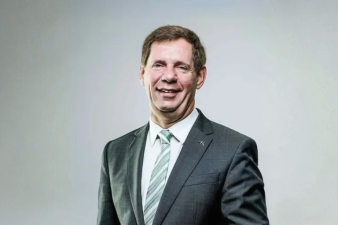
Brussels, 1 October 2026 - The European Steel Association (EUROFER) has elected Geert Van Poelvoorde, Chairman of the Board of ArcelorMittal Europe Steel, as its new President. Taking office today, Mr Van Poelvoorde said stronger home markets across the steel value chain, secure access to export markets and a strong industrial base will be essential to delivering on the European Union’s ambitions for global competitiveness and strategic autonomy.
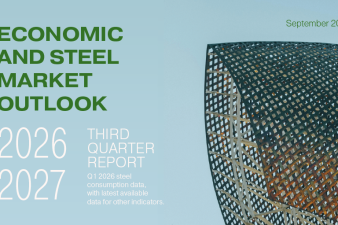
Brussels, 1 October 2026 - Europe’s steel market remains under significant pressure, with exports falling sharply, production at historic lows and demand expected to remain almost flat in 2026, according to the European Steel Association’s (EUROFER) latest Economic and Steel Market Outlook 2026-2027. EU steel exports to third countries fell by 20% in the first half of 2026, with declines across all major export destinations covered by the report. At the same time, crude steel production continued to falter, after reaching a historic low of 125.8 million tonnes in 2025, while apparent steel consumption is forecast to grow by just 0.1% in 2026, before increasing by 2.3% in 2027.
Ship recycling
The European Steel Association (EUROFER)
172 Avenue de Cortenbergh
1000 Brussels
Belgium
Email: mail@eurofer.eu
Phone: +32 (0) 2 738 79 20